

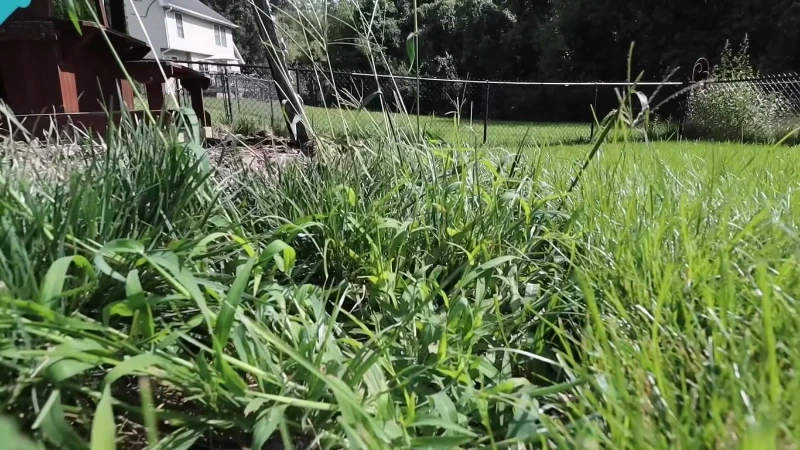
Lawn Fertilization and Weed Control Wesley Chapel — Fed Right, Timed Right
Sandy soil doesn’t hold nutrients the way you’d think it should, and that’s usually where the trouble starts.
Licensed & Insured · UF/IFAS-Informed Turf Care · Same Crew Every Visit · No Long-Term Contracts · Serving Wesley Chapel Since 2020
If your lawn is fed on the same fixed calendar every year and it’s still yellowing in patches, thinning out by the driveway, or growing crabgrass faster than you can pull it, the schedule isn’t the problem — the diagnosis is. Most Wesley Chapel yards don’t fail because they missed a treatment. They fail because the treatment they got wasn’t for what was actually wrong with the grass. We built lawn fertilization and weed control Wesley Chapel homeowners actually trust around one rule: test first, then treat. That’s it. Not the fourth stop on a truck’s route that day.
Wesley Chapel sits on sandy, fast-draining Pasco County soil that leaches nitrogen almost as fast as we can apply it, which is exactly why a national one-size-fits-all fertilizer program burns through your budget without ever catching up to what your lawn needs. We soil-test, identify the actual weed pressure and turf stress you’re dealing with — St. Augustine chinch damage mimicking a feeding gap, dollarweed pooling in that one low corner, crabgrass breaking through a missed pre-emergent window — and build a plan around what we find, not a franchise script.
We Don’t Run a Fixed Four-Step Calendar
We’ve walked enough Wesley Chapel yards to know that “spring, summer, fall, winter, repeat” isn’t a lawn care plan — it’s a subscription. Two lawns three doors apart on the same street can need completely different feeding schedules depending on drainage, shade, and how much builder-grade sod was actually laid down versus how much has been re-sodded since. We test soil, walk the property, and diagnose before a single bag of fertilizer or drop of herbicide goes down.
Who We Help
- Homeowners with yellowing, thinning, or patchy grass they can’t identify themselves — is it a nutrient gap, a pest, a fungus, or just bad drainage?
- New-construction owners across Wesley Chapel whose builder-grade sod was never properly established and is now struggling on its own
- HOA residents across Wesley Chapel who’ve gotten a compliance notice and need the lawn fixed correctly, not just greened up temporarily
- Homeowners tired of the same four treatments a year regardless of what’s actually growing in their yard
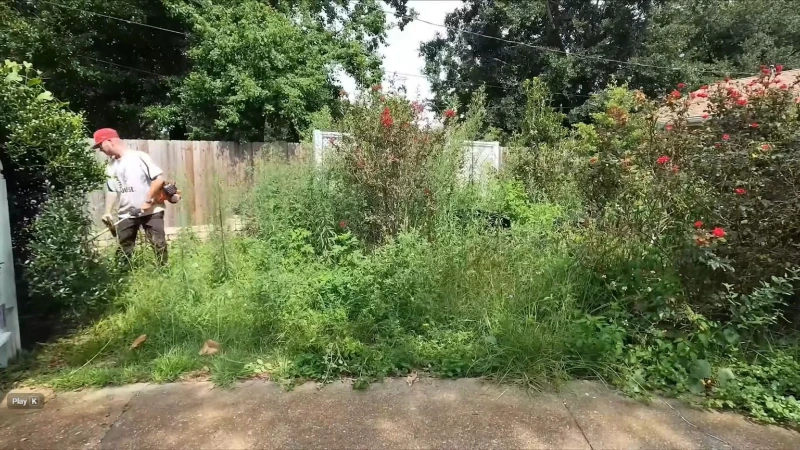
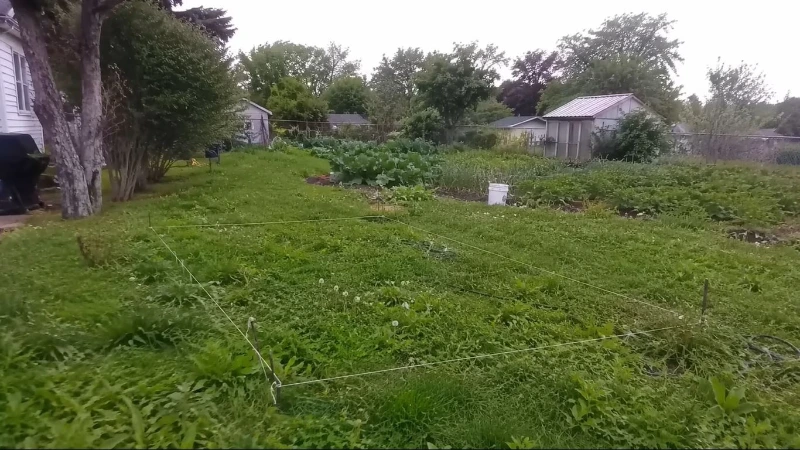
Why Wesley Chapel Lawns Fight Weeds and Yellowing Year-Round
If you’ve lived here more than a season, you already know Florida lawn care doesn’t run on the same clock as anywhere up north. Between the sandy soil, the year-round growing season, and Pasco County’s one-day-a-week watering restriction, Wesley Chapel lawns are working with a completely different rulebook — and most fertilizer and weed programs sold here still don’t account for it.
- Sandy soil and nitrogen leaching: Pasco County soil drains so fast that a standard-release fertilizer can wash past the root zone before the grass ever absorbs it, which is why so many lawns here look “fed” for two weeks and hungry for the other ten.
- Crabgrass and pre-emergent timing: Pre-emergent herbicide only works if it’s down before crabgrass germinates, and that window is tied to soil temperature, not a date on a calendar — miss it by even a week here and you’re treating crabgrass that’s already up instead of preventing it.
- Dollarweed and nutsedge tracking moisture: Both weeds concentrate in the same low, slow-draining spots year after year, which means spraying the whole yard the same way misses the actual source and wastes product everywhere else.
- St. Augustine and Floratam herbicide sensitivity: A lot of over-the-counter and franchise weed treatments are formulated for northern turf and will scorch or stress Floratam if applied at the wrong rate or temperature — we’ve corrected more than one lawn that was actually hurt by the “fix.” (See UF/IFAS guidance on St. Augustinegrass for Florida lawns.)
- Builder-grade new sod underfeeding: New-construction sod in Wesley Chapel is often laid on stripped, nutrient-poor fill dirt, and it needs an establishment feeding program, not the same maintenance-rate fertilizer used on an established lawn.
We built our Wesley Chapel lawn fertilization services around these five patterns specifically, because a generic national program simply isn’t written for sandy Florida turf on a one-day watering restriction.
Our Fertilization & Weed Control Process
STEP 1
Test
We pull a soil sample and check pH, nutrient levels, and moisture retention before recommending anything. Guessing at fertilizer rates on sandy soil just wastes product and your money.
STEP 2
Identify
We walk the lawn and identify exactly which weeds are present, what turf stress or pest pressure is at play, and whether what looks like disease is actually a feeding or drainage issue.
STEP 3
Apply
We apply the correct fertilizer formulation and weed treatment for what we actually found, timed to soil temperature and season, not a fixed quarterly schedule.
STEP 4
Monitor
We check back in the guarantee window to confirm the treatment held, and adjust the plan if Wesley Chapel’s growing conditions shift before the next visit.
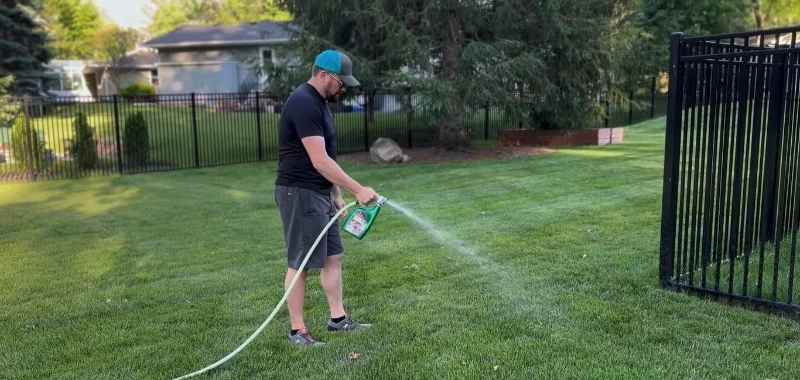
If the Weeds Come Back, So Do We — Free
Our guarantee stands behind the diagnosis, not just the spray. If the treated weeds return in the same treated area within the guarantee window, we come back and re-treat it at no charge — because if it comes back, that means we didn’t get the full picture the first time, and that’s on us to fix. This is the same standard behind every one of our Wesley Chapel lawn fertilization services calls: we don’t consider the job done until the actual problem is gone, not just less visible for a couple of weeks.
Results From Wesley Chapel Homeowners
Crabgrass Outbreak From a Missed Pre-Emergent Window
A Wesley Chapel homeowner had crabgrass breaking through along the sidewalk edge every spring despite a “weed prevention” plan from a previous provider. When we tested, the issue wasn’t the product — it was timing. The prior service applied pre-emergent on a fixed calendar date that landed two weeks after soil temperatures had already crossed the germination threshold. We reset the schedule to soil-temperature triggers instead of a fixed date, and the following spring the sidewalk edge stayed clean.
Yellowing Mistaken for Disease That Was Actually a Feeding Gap
A Wesley Chapel homeowner was treating what looked like a fungal outbreak — uniform yellowing across the back lawn — with a store-bought fungicide that wasn’t touching it. Our soil test showed a nitrogen deficiency consistent with sandy-soil leaching, not disease. We switched to a slow-release feeding program suited to the drainage on that property, and the yellowing resolved within a few weeks without a single fungicide application.
Dollarweed Concentrated in the One Slow-Draining Corner
A Wesley Chapel homeowner had dollarweed that kept returning no matter how often the whole yard was sprayed. Walking the property, we found one low corner near a downspout that stayed consistently damp — that’s where every dollarweed patch traced back to. We spot-treated the actual source area and adjusted drainage guidance instead of blanket-spraying the whole lawn, and the dollarweed hasn’t returned to that corner since.
What Wesley Chapel Homeowners Say
“Our lawn was getting a random handful of fertilizer every few months from the last company, no real plan behind it. These guys tested the soil first and actually explained why we were behind on nitrogen. Completely different level of service.”
“We moved into a new build in Wesley Chapel last year and the sod never looked right no matter how much we watered it. Turned out it needed its own establishment feeding schedule, not the same treatment as an older lawn. Huge difference within a month.”
“Called about weeds taking over near our drainage area and they didn’t just spray the whole yard — they actually found the wet spot causing it and treated that. Hasn’t come back since.”
Everything below is something a Wesley Chapel homeowner has actually asked us, standing in their own yard — not filler pulled from a generic FAQ list.
Fertilization & Weed Control Questions, Answered Straight
Questions Wesley Chapel homeowners ask us on-site, answered the way we’d answer them in your yard.
01When should I fertilize and treat weeds in Wesley Chapel?
02What’s the most effective weed treatment for my lawn?
03Does fertilizer actually help with weed control, or are they separate problems?
04What’s the difference between pre-emergent and post-emergent weed treatment?
05How do I know if my lawn needs fertilizer or if something else is wrong?
When should I fertilize and treat weeds in Wesley Chapel?
Pre-emergent weed control needs to go down before soil temperatures hold in the mid-60s for several consecutive days, which in Wesley Chapel is typically late winter, not a fixed calendar date. Fertilization should follow a similar temperature-driven schedule rather than a strict quarterly plan, since our sandy soil and near-year-round growing season don’t match the dormancy cycle that most national fertilizer schedules are built around.
What’s the most effective weed treatment for my lawn?
It depends entirely on which weeds you have and what turf type you’re treating. Crabgrass needs pre-emergent timed to soil temperature, dollarweed and nutsedge need moisture-source correction alongside spot treatment, and any herbicide used on St. Augustine or Floratam has to be rate-checked for turf sensitivity — a broadleaf weed product safe for one turf type can scorch another, so we identify the weed and the grass before choosing the treatment.
Does fertilizer actually help with weed control, or are they separate problems?
They’re connected more than most people realize. A thin, underfed lawn has bare soil and weak turf density, which is exactly the opening weeds like crabgrass and dollarweed need to establish. A properly fed, dense St. Augustine or Floratam lawn crowds out a lot of weed pressure on its own, which is why we treat fertilization and weed control as one coordinated plan instead of two separate services.
What’s the difference between pre-emergent and post-emergent weed treatment?
Pre-emergent stops weed seeds from germinating in the first place and has to go down before the weeds appear, while post-emergent kills weeds that are already growing. In Wesley Chapel, pre-emergent timing is the harder one to get right because our soil warms up earlier and less predictably than northern climates, so a calendar-based pre-emergent application often misses the actual germination window entirely.
How do I know if my lawn needs fertilizer or if something else is wrong?
Yellowing, thinning, and patchy growth can come from a nutrient deficiency, but they can also come from chinch bugs, fungal disease, drainage issues, or over-watering — which is exactly why we soil-test and inspect before recommending a fertilization plan. A lawn that looks hungry isn’t always hungry, and applying fertilizer to a pest or drainage problem usually just masks it for a couple of weeks before it comes back worse.
Related Services
- Lawn Pest Control Wesley Chapel — if chinch bugs or sod webworms are part of what’s stressing your lawn alongside weeds, this page covers diagnosis and treatment.
- Irrigation & Watering Restriction Compliance — fertilizer and weed treatment only work as well as your watering schedule allows.
- Lawn Mowing & Maintenance — consistent mowing height and frequency directly affects how well fertilizer and weed treatments hold.
Ready for a Lawn That’s Actually Diagnosed, Not Just Sprayed?
Stop guessing at what’s wrong with your lawn and get an honest answer from someone who’s walked hundreds of yards just like yours across Wesley Chapel. Our Wesley Chapel lawn fertilization services start with a soil test, not a sales pitch, and we’ll build a plan around your lawn — not a franchise calendar.
- ✅ Soil-tested before we treat, not guessed at
- ✅ Formulated for Wesley Chapel’s sandy soil and turf types
- ✅ Backed by our “comes back, we come back” guarantee
- ✅ Same crew every visit, no long-term contract
About Us
Lawn Sentinel Wesley Chapel is a local, Wesley Chapel-only lawn care team specializing in weekly mowing, HOA-ready maintenance, and watering-restriction-safe lawn treatment. We live in this climate too — sandy soil, hurricane season, and one-day-a-week watering aren’t theoretical to us. Our mission is simple: reliable service, real results, and lawns that stay healthy through Florida’s toughest seasons.
Areas We Serve
Proudly Serving Wesley Chapel, FL