

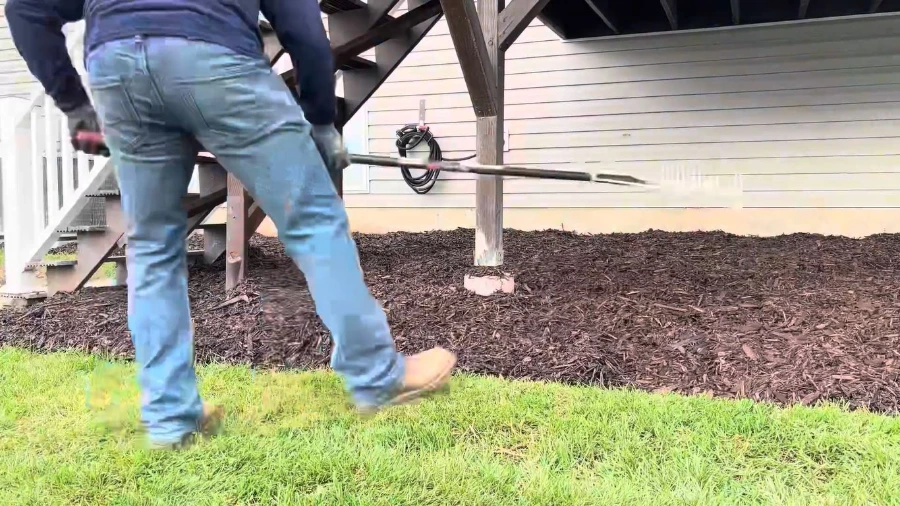
Landscape Design and Mulch Installation Wesley Chapel FL
We design beds that survive Florida rain and install mulch the way the code actually requires — not piled against your siding like the last crew did it.
Serving Wesley Chapel Since 2020 · Licensed & Insured · Wesley Chapel, FL
Most landscape design Wesley Chapel FL homeowners call us after they’ve already paid someone else once. Maybe the beds looked good for six weeks and then the mulch washed into the driveway during the first real summer storm. Maybe a “landscaper” piled dyed mulch three inches up the side of the house because it looked tidy for the photo. Either way, the design didn’t account for how this specific climate actually behaves, and the install didn’t account for what the Florida Building Code actually requires.
We build every design and every mulch install around two things that don’t change: Pasco County’s sandy, fast-draining soil, and a rainy season that runs June through November and will find every low spot and every washout risk in a bed that wasn’t graded correctly. We diagnose the site before we design it — soil, drainage, sun exposure, existing root systems — then we install to a standard that holds up past the first storm, not just past the first photo.
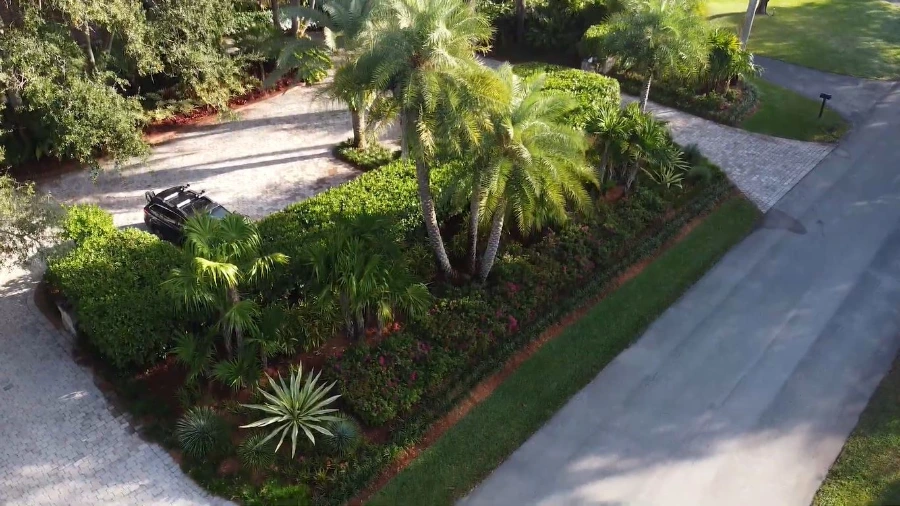
Landscape Design Homeowners Can Actually Verify
Our landscape design Wesley Chapel FL process starts with a site walk, not a stock plant list. We check your yard’s sun exposure by section, your soil’s drainage rate, and — for new-construction lots across Wesley Chapel — whatever builder-grade grading is already fighting against you. Then we design and install using Florida-Friendly Landscaping (FFL) principles, the University of Florida/IFAS program built specifically for Florida’s sandy soil, heavy rain, and drought-restriction cycles, so the bed you get is designed to survive here, not just look good in a rendering.
- New-construction homeowners across Wesley Chapel with untouched or poorly-graded builder landscaping
- HOA residents across Wesley Chapel who need beds and mulch that pass architectural review without a fight
- Homeowners replacing washed-out mulch that’s faded, thinned, or gone moldy after last year’s rainy season
- Anyone who paid for a landscape design and got something that doesn’t match what was quoted
- Homeowners who’ve noticed pest activity near mulched beds close to the house
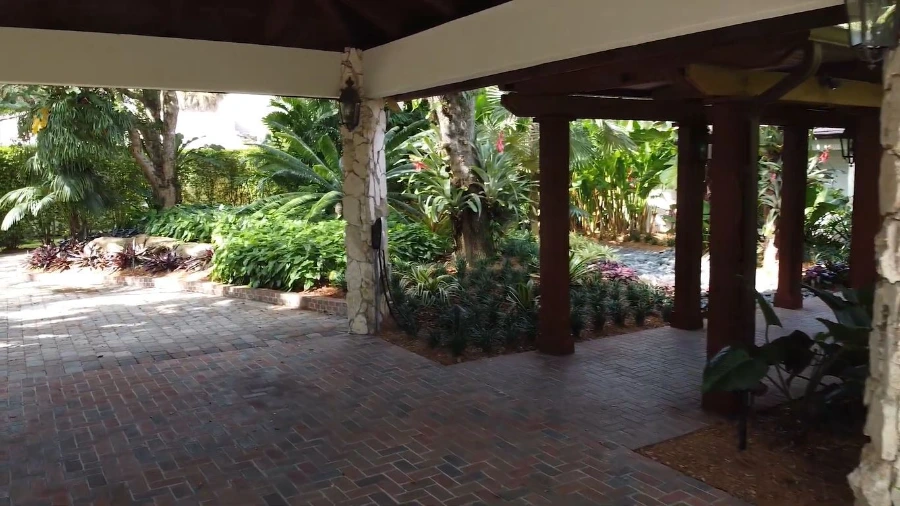
What a Properly Finished Bed Actually Looks Like
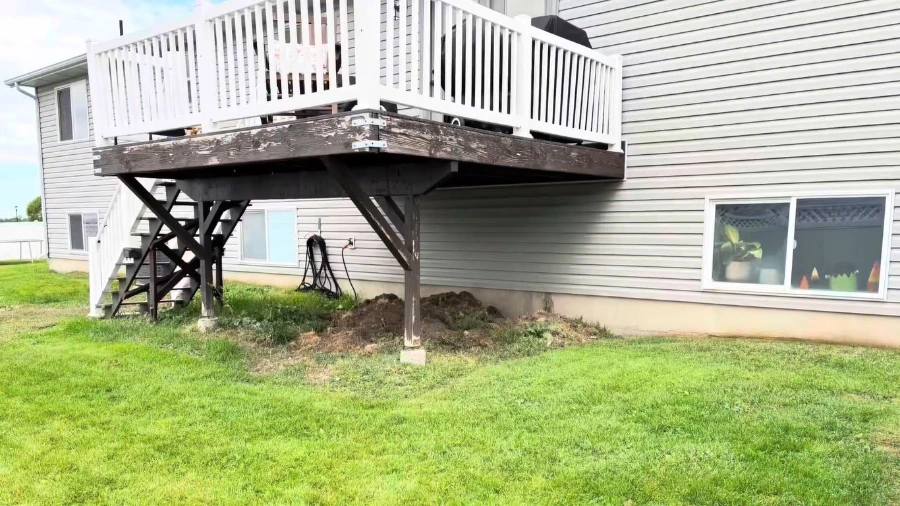
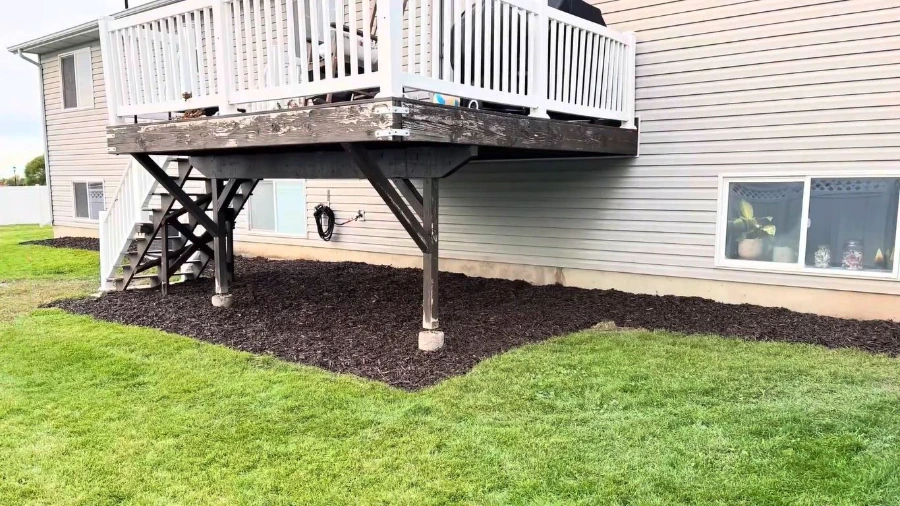
This is what the process above looks like once it’s done right: even mulch color and depth across the whole bed, a clean gap between the mulch line and the siding, and plants set with enough room to establish without crowding. This is the standard every job we finish gets held to — not just the first week, but through the next rainy season too.
- Even, measured mulch depth across the entire bed, not just the visible front edge
- Visible foundation clearance maintained along every wall the bed touches
- Plants spaced to their mature size, not packed tight for an immediate “full” look that outgrows itself
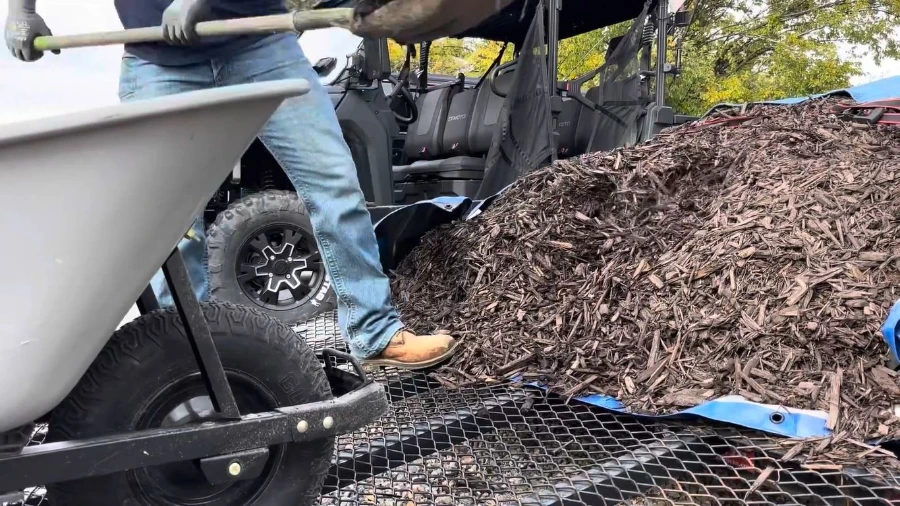
Why Wesley Chapel Mulch Beds Don’t Last
Most of the mulch complaints we see trace back to the same handful of mistakes, and none of them are complicated to avoid if the crew actually knows what they’re doing:
- Mulch piled against the foundation. This is the single most common mistake we see on new-construction lots, and it’s not just cosmetic — see the Foundation Clearance section below.
- Cypress mulch installed without disclosure. UF/IFAS’s own Florida-Friendly Landscaping program does not recommend cypress mulch because its sourcing can’t reliably be verified as sustainably harvested.
- No grading before mulch goes down. Beds installed flat or sloped toward the house wash out in the first heavy rain and can push water toward your foundation instead of away from it.
- Mulch depth guessed instead of measured. Too thin and it does nothing for weed suppression or moisture retention; too thick and it suffocates roots.
- Mulch packed against tree trunks and shrub stems. This traps moisture against bark, which invites rot and disease.
- Design quoted one way, installed another. Plant selection or bed layout changes on install day with no homeowner sign-off.
The 6-Inch Rule Most Wesley Chapel Landscapers Never Mention
The Florida Building Code requires a minimum 6-inch clearance between mulch (or soil, or sod) and your home’s siding or stucco. This isn’t a style preference — it’s written into the code because that gap is what lets a termite inspector actually see foraging tubes along your foundation. Mulch piled up against the house, the “volcano” look some crews default to because it’s fast and looks full, closes that inspection gap entirely.
It’s also a real pest risk on its own terms. UF/IFAS’s Florida-Friendly Landscaping program specifically flags that woody mulch held against a foundation can attract termites — independent of the building code, just as a matter of what termites are drawn to. In a climate where subterranean termites are active year-round, that’s not a small detail.
Here’s what we actually do differently: every mulch bed we install in Wesley Chapel keeps a minimum 6-inch gap from siding, stucco, and any wood trim, following UF/IFAS’s own installation spec of a 2-to-3-inch mulch depth on beds with at least 2 inches of clearance around tree trunks and shrub stems to prevent rot. We measure it. We don’t eyeball it and hope.
How We Design and Install
STEP 1
Site Walk & Soil Check
We assess drainage, sun exposure, existing plant health, and how water actually moves across your lot during a heavy rain — not just how it looks on a dry day.
STEP 2
Design & Material Selection
We build the plan around Florida-Friendly Landscaping principles and confirm mulch type, color, and sourcing with you before anything is ordered — no cypress mulch installed without your knowledge.
STEP 3
Grading & Bed Prep
Beds are graded to move water away from your foundation, not toward it, before a single bag of mulch goes down.
STEP 4
Install to Code
Mulch goes down at 2–3 inches, with the full 6-inch foundation clearance and 2-inch trunk/stem clearance measured, not guessed.
Our Landscaping Guarantee
If mulch we installed washes out, sinks, or fails to hold within the first season, we come back and fix it — free. We test the site and design around your soil and drainage before we install, because a landscape design Wesley Chapel FL homeowners can rely on has to survive this climate, not just launch day.
Real Wesley Chapel Mulch & Landscape Cases
Mulch Piled Against Stucco
Looked like: New mulch beds around the foundation looked full and tidy right after the builder’s landscaping crew finished.
Turned out to be: Mulch was piled directly against the stucco with zero inspection clearance, closing off termite access checks and holding moisture against the wall.
What we did: Pulled mulch back to a measured 6-inch clearance, regraded the bed to slope away from the foundation, and re-mulched at the correct 2–3 inch depth.
Outcome: Homeowner passed their next termite inspection with no access issues flagged, and the bed held through the following rainy season without washout.
Thin Mulch Failed HOA Review
Looked like: Front bed mulch had faded and thinned out within a few months, and the HOA had flagged the property for bed maintenance.
Turned out to be: The original install used a thin, low-grade mulch layer under an inch deep — nowhere near UF/IFAS’s recommended 2–3 inch depth — so it broke down fast under Florida sun and rain.
What we did: Re-mulched to spec depth with a Florida-Friendly-recommended material, sourced with disclosed origin (no unverified cypress).
Outcome: Bed passed HOA architectural review and has held its depth and color through a full rainy season.
Design Didn’t Match the Install
Looked like: A newly designed backyard bed looked good on the proposal but didn’t match what got installed — different plant spacing, no mulch edging.
Turned out to be: The prior crew skipped the design sign-off step and installed from memory instead of the approved plan.
What we did: Rebuilt the bed to the original approved design, with the homeowner walking the site with us before install day.
Outcome: Homeowner got the design they actually paid for, with a documented plan they can reference for future maintenance.
Frequently Asked Questions
We hear a lot of the same questions standing in someone’s front bed in Wesley Chapel. Here’s what usually comes up.
01How much does landscape design and mulch installation cost in Wesley Chapel, FL?
02How close can mulch be to my house in Florida?
03Why is my new mulch attracting bugs or termites?
04How deep should mulch be, and how often does it need to be replaced in Florida’s climate?
05Can my HOA stop me from choosing Florida-friendly landscaping?
More Ways We Support Your Landscape Design and Mulch Installation Wesley Chapel FL Project
- Lawn Fertilization & Weed Control — newly mulched beds still need the right fertilization schedule so plants establish instead of competing with turf.
- Irrigation & Watering Restriction Compliance — new beds and plantings need a watering plan that works within Pasco County’s current restrictions.
- Sod Installation & New-Construction Recovery — sod and mulched beds are graded together so water moves away from your home, not toward it.
Get Landscape Design and Mulch Installation Wesley Chapel FL Homeowners Can Trust
- ✅ Foundation-clearance mulch installation, measured to code
- ✅ Florida-Friendly design built for sandy soil and rainy-season drainage
- ✅ HOA-ready plans that fit your community’s architectural guidelines
About Us
Lawn Sentinel Wesley Chapel is a local, Wesley Chapel-only lawn care team specializing in weekly mowing, HOA-ready maintenance, and watering-restriction-safe lawn treatment. We live in this climate too — sandy soil, hurricane season, and one-day-a-week watering aren’t theoretical to us. Our mission is simple: reliable service, real results, and lawns that stay healthy through Florida’s toughest seasons.
Areas We Serve
Proudly Serving Wesley Chapel, FL